Diagnose GraphQL query language
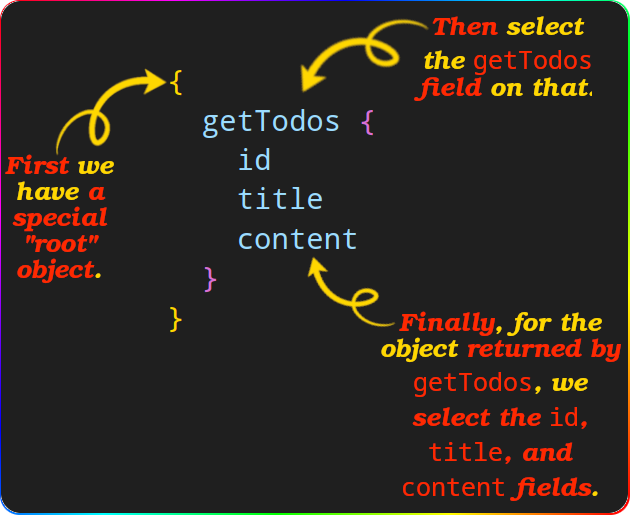
- In a GraphQL service we define our schema and then the incoming requests will be validated against it.
- Approaches in defining the schema:
- All-in-One Definition: define the schema directly in your code.
- Using Schema Definition Language (SDL): define schema in a separate file.
- Schema inferred from code: you have resolvers annotated with decorators, then a lib will generate the schema based on your code.
- Infer schema and resolver from the underlying database.
Jargons
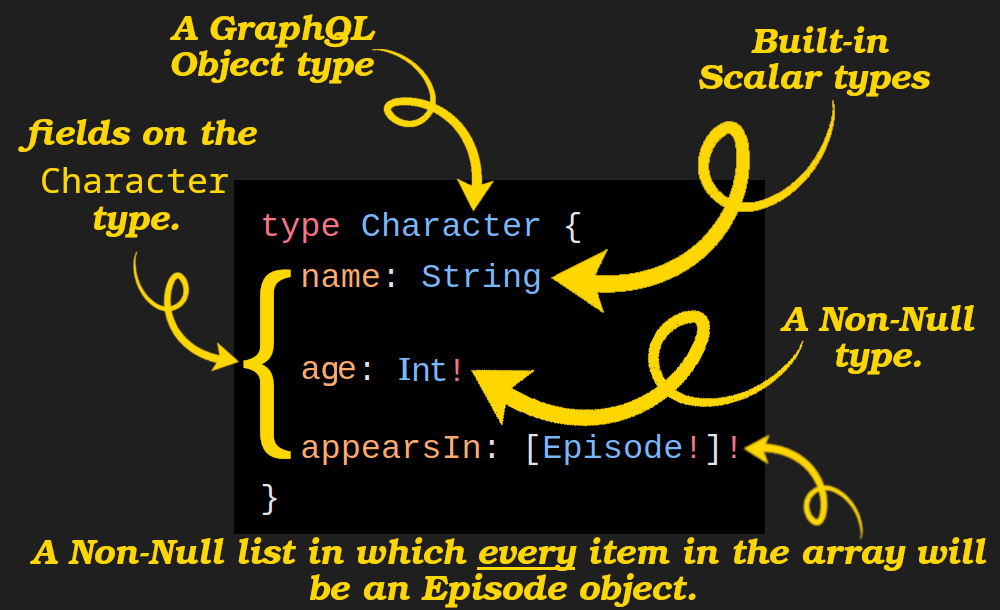
- GraphQL Object type
- A type with some fields.
- Field
-
Fields that can appear in any part of a GraphQL query that operates on the
Charactertype. - List type
- An array of the specified type.
- Cannot define a non-empty list (an array with at least one member).
- A type modifier.
- Non-Null type
- The GraphQL service promises to give you a value whenever you query this field.
- A type modifier.
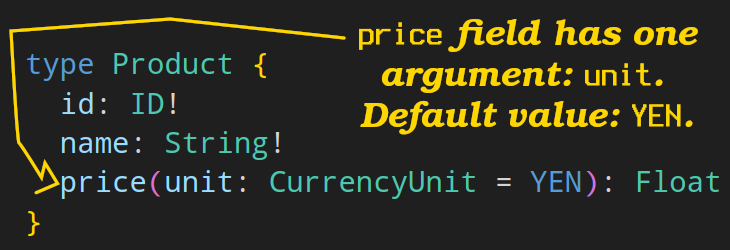
- Argument
- Arguments in GraphQL are passed by name specifically. Order does not matter!
- All arguments are named.
- Every field on a GraphQL Object type can have zero or more arguments.
- Can be required or optional.
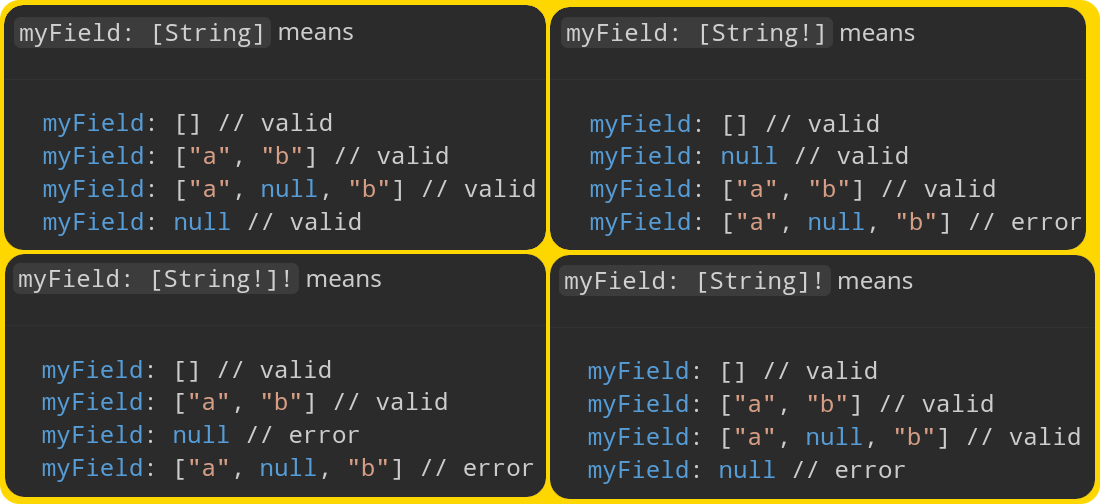
[!TIP]
[type]VS[type]!VS[type!]VS[type!]!
The Query, Mutation, and Subscription types
[!IMPORTANT]
- Every GraphQL schema must support
queryoperations.- The entry point of a “root” operation type is a regular Object type called
Queryby default.
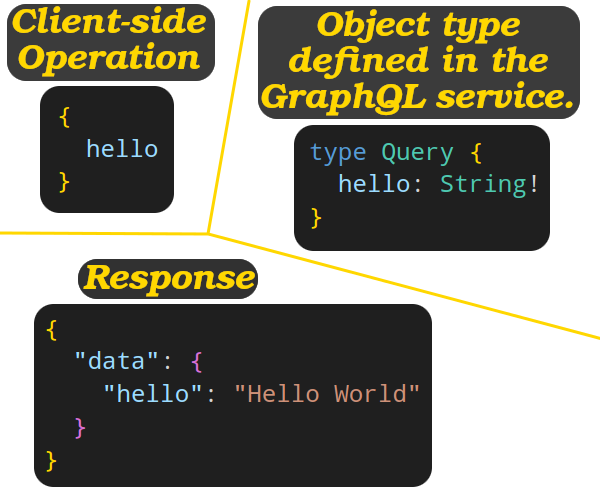
Query,Mutation, andSubscriptionare entry points of my GraphQL API.- Note that they should start with a capital letter and the same name as they are listed here.
-
If you want to use a custom name, you can do it. But then you need to tell GraphQL about it:
type MySubscriptionType {
  todoStatusChange: Todo!
}
type MyMutationType {
  createTodo: Todo!
}
type MyQueryType {
  getTodos: [Todo]
}
schema {
  query: MyQueryType
  mutation: MyMutationType
  subscription: MySubscriptionType
}
Learn more about Subscription here