Queries
- So we now know how to query a GraphQL server to some extend:
- When we query response’s shape is exactly the same as your query (AKA WYSIWYG).
Don’t Repeat Yourself (DRY) – Named Fragments
We need to reuse parts of our queries. For sake of having an easier time to develop and maintain we can use fragments. It shines where we have:
- Complex schemas.
- Consistent data structures in multiple parts of our app.
Imagine in our todo app we need to show a lot more data to the user than what we show them in index page. So our client want to be able to query specify common fields in a fragment and expand it in the query for a single todo.

You need to define fragments in your client-side app – ref. And as yo how you can use this logic in your ReactJS app you can look at this YouTube video.
[!TIP]
You can also pass variables to your
fragment(learn more here).
Work with generic types and concrete ones – inline fragments
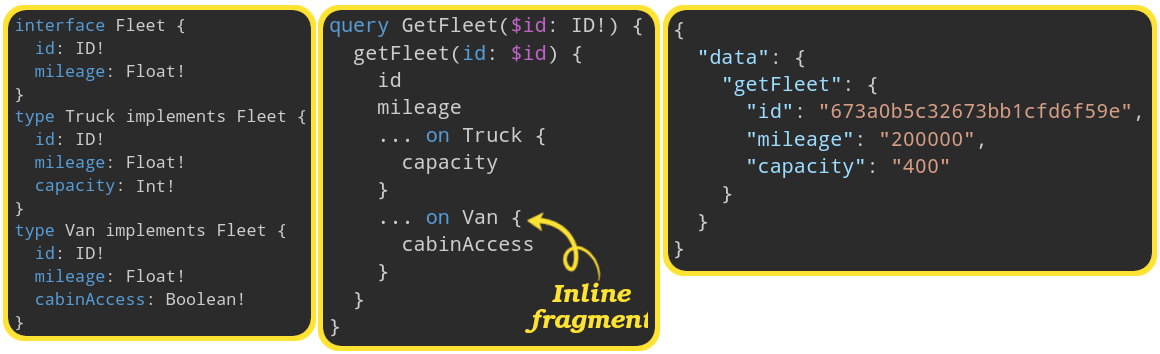
So assume we have 3 interfaces:
Fleetwhich is a generic type.Truckwhich is a fleet with a concrete interface,Vanwhich is also a fleet with a concrete interface.
Now we wanna fetch data from a shared endpoint. We will ask for mileage which is something defined in Fleet. And we need to get some specific fields based on the returned interface type:
- If it is a truck we wanna add its
capacity. - If it is a van we need to get its
cabinAccess.
[!TIP]
Named
fragments can also be used and this is not restricted to inlinefragments.
Variable
By using variables:
- Their type must be either:
- You client code do not need to serialize them into a GraphQL-specific format.
- GraphQL’s first-class way to factor dynamic values out of the query.
- By factor out in a dictionary, we usually mean to pass it as a separate key-value pair in your HTTP req (look at this example).
- Denotes clearly what is dynamic and what is not.
- Never do string interpolation to construct a query with user-supplied values.
-
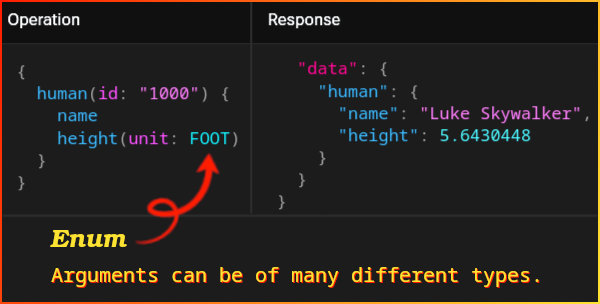
You can define default values for them the same way you do in JS for function arguments.
query getProducts($filter: ProductFilterInput = DISCOUNT) { # ... } - You can abstract away a lot of data transformation from clients to backend to centralize it for a smoother dev exp and user exp:
[!NOTE]
You can define any custom type, but you should define it in a representable way, in a format suitable for communication between the client and server.
Aliases
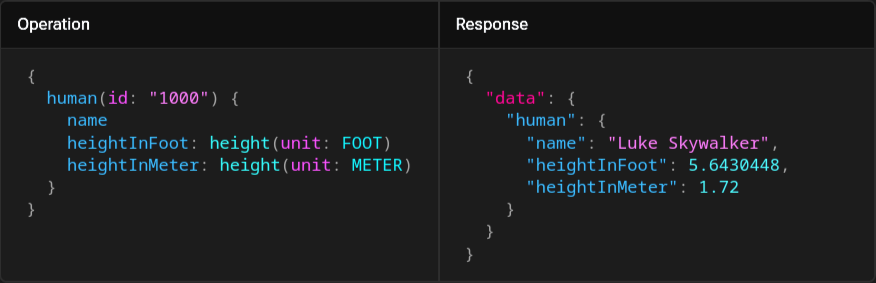
You cannot query for the same field with different arguments. Solution? Aliases:
They let you rename the result of a field to anything you want. **Another use case** is when your client wants to rename fields to something that is tailor to their specific programming language.
Directives
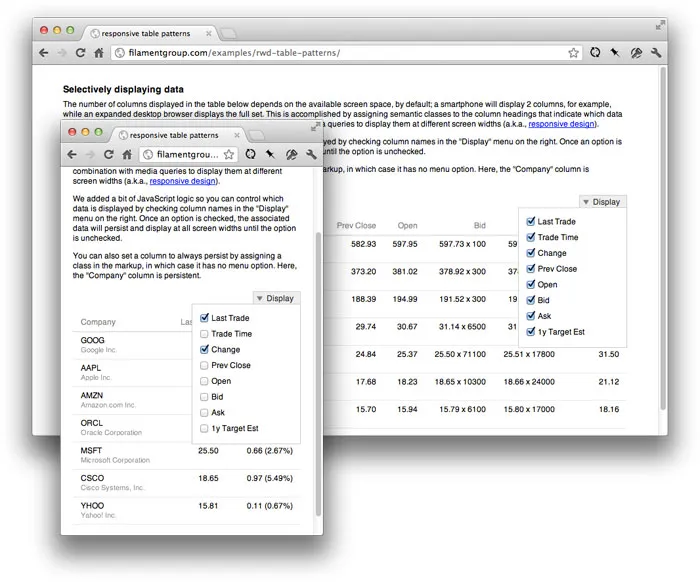
Now imagine you need to fetch data based on some conditions that will be provided by user:
- Annotate the types, fields, and arguments.
- Validated or executed differently.
- They accept arguments too.
-
We have:
Executable directives Rest of built-in directives @include,@skip@deprecated -
Here is how you could have implemented the
@deprecateddirective by yourself: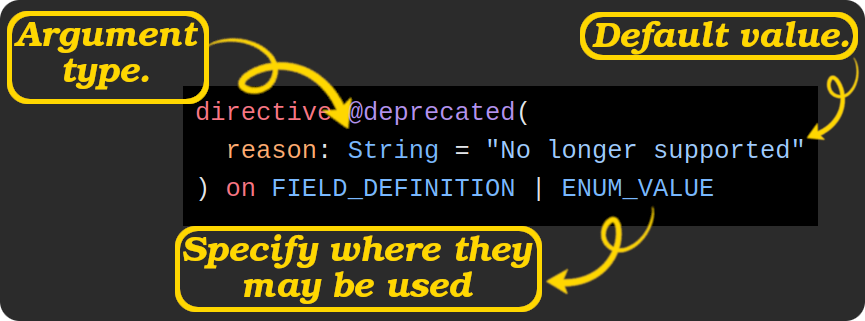
- You can define custom ones too, e.g. here you can see how it is done in NestJS.
query GetProducts(
  $filter: FilterProductsInput
  $withLastTrade: Boolean!
) {
  getProducts(filter: $filter) {
    id
    lastTrade @include(if: $withLastTrade) {
      volume
    }
    # ...
  }
}
We also have another directive which is @skip, but ATM I am failing to see any real world implication for it. But that’s just me and I am pretty sure that there are use cases for @skip too.
[!NOTE]
- We use directives to not manipulate and change our query dynamically.
- Server implementation can also define directives.
Mutations
-
In mutation you can specify the response you wanna get if your GraphQL service return an object.
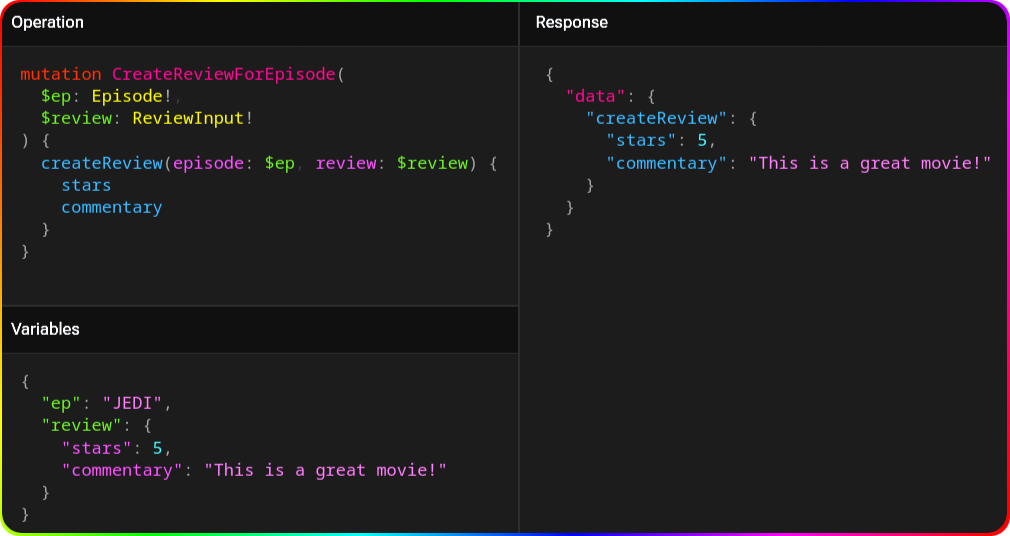
Side effects
- In RESTful APIs we have the concept of side effects and there we say that
GETrequests should not have any side effect. But other HTTP methods can have side effects (please do not confuse this with idempotency). - In GraphQL we follow the same rule,
queryoperation type should be side-effect-free whilemutationcan have side effects.
Order of execution for specified fields
| Operation type | Execution order | Implications |
|---|---|---|
query. |
Parallel/concurrent. | |
mutation. |
Series. | E.g. if you call incrementCredits twice they run one after another. |
Metadata
-
You can ask your GraphQL service to send you back the type of object.
